OHS-2016-Secondary-RGB.jpg

The Oshawa Historical Society was founded in 1957 and is an affiliate of the Ontario Historical Society. The purpose of the Oshawa Historical Society is to bring together those individuals interested in the diverse historical aspects of Oshawa and to research, record, retain, preserve, and present historical information pertaining to the Oshawa area.

This website provides information on the Oshawa Historical Society, its  history, Membership information, and the latest updates on our Speaker Series.

The Oshawa Historical Society also manages the Oshawa Museum, located in Oshawa’s beautiful Lakeview Park.  Joining the Oshawa Historical Society is the best way to experience the Oshawa Museum. Membership is an affordable way to stay connected, and by joining you will become a partner in preserving local heritage.

For information on how to join, please contact the Membership Co-ordinator at
membership@oshawamuseum.org or 905-436-7624 (x 105).

The Oshawa Historical Society acknowledges that the land on which it operates is situated on the traditional territory and treaty lands of the Mississaugas of Scugog Island First Nation. Our work on these lands acknowledges the signatory communities of the Williams Treaties, as well as the Michi Saagiig Nation and other members of the Indigenous community, for their continued stewardship of the lands and waterways since time immemorial, and their longstanding contributions to the area now known as Durham Region.
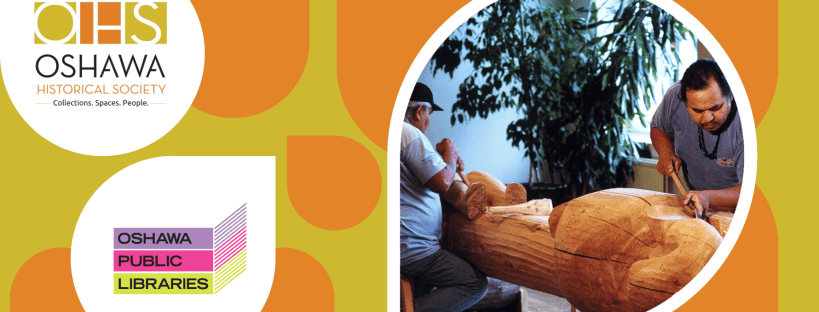
Local History Speaker Series: Movie Night, Totem: The Return of the G’psgolox Pole

For the November Local History Speaker Series, we are showcasing a film, provided courtesy of the National Film Board of Canada. Join us for a screening of Totem: The Return of the G’psgolox Pole.

In 1929, the Haisla people of northwestern British Columbia returned from a fishing trip to find a 9-metre-high totem pole, known as the G’psgolox pole, had been severed at the base and removed from their village. The fate of the 19th-century pole remained unknown to them for over sixty years. In this film, director Gil Cardinal reveals the Haisla’s 1991 discovery of the pole in a Stockholm museum, where it was considered state property by the Swedish government.

From the lush rainforest near Kitamaat Village, British Columbia, to the National Museum of Ethnography in Sweden, Cardinal’s documentary traces the fascinating journey of the Haisla to reclaim their traditional mortuary pole. Bringing to light a powerful story of cultural rejuvenation, this film raises provocative questions about the ownership and meaning of Aboriginal objects held in museums.

Cardinal skillfully layers compelling interviews, striking imagery and rare footage of master carvers creating a replica pole. The Haisla have fulfilled a promise to the museum to replace the original totem. Now, having honoured their side of the bargain, they await the return of the G’psgolox pole.

November’s Local History Speaker Series is taking place Tuesday, November 17 at 6 PM. The Speaker Series will be held at the McLaughlin Branch of the Oshawa Public Libraries, in the lower level auditorium, located at 65 Debwewin Miikan.

The Local History Speaker Series is an event presented in partnership between the Oshawa Historical Society and the Oshawa Public Libraries.

Public Registration Link:

OHS Members: Registration is required. The registration link has been emailed to all members. If you need the link, please email Lisa at membership@oshawamuseum.org.